The word “yoga” usually refers to a form of physical exercise which can invigorate and heal the body, lift the spirit and calm down the restless mind. This can create a state of well- being.
Yoga originated in India around 5000 years ago and is the oldest system of personal development in the world. In his yoga sutras the Indian sage Patanjali defines yoga as the control of the activities of the mind, which is achieved through ethical disciplines, physical postures, breath control and meditation.
The word yoga comes from the Sanskrit word “yuj” which means to merge, unite, or join. Yoga methods encompass the entire field of human existence: physical, emotional, mental and spiritual. It is a holistic practice and a practical philosophy which can help us achieve a healthy, balanced and meaningful life.
To quote BKS Iyengar : “Regular practice of yoga can help you face the turmoil of life with steadiness and stability.”
Yogacharya BKS Iyengar is the most influential yogi of our time who has developed a unique way of practising and teaching yoga. Iyengar yoga takes its name from him.
He was born in Bellur, a poor and remote Southern Indian village, in 1918 but has lived for most of his life in Pune where he established the Ramamani Iyengar Memorial Yoga Institute (RIMYI). Iyengar yoga is now taught in over 40 countries worldwide and there is a network of 180 national Iyengar Yoga Associations all stemming from BKS Iyengar’s Institute in India. His study and mastery of yoga are unrivalled in modern times and he has won universal recognition for his achievements in the popularisation of yoga, making it accessible and relevant to people everywhere. He has set the highest standards in the teaching and practice of this discipline. His many books e.g. ‘Light on Yoga’, ‘Light on Pranayama’, are classics. In 2004, BKS Iyengar was named one of the 100 most influential people in the world by Time Magazine.
The way the asanas are practised makes the physical aspect itself become meditational.
There is more attention to precision and safety in the practice of the asanas.
There is a focus on the three key elements of technique, sequence and timing.
Technique means that in practice one learns ever-finer adjustments in the alignment of how to perform asanas (postures) and pranayama (breath control).
Sequence refers to the sequences in which asana and pranayama are practiced, e.g. by varying the order of the postures, the mental and emotional effects of the practice can be intensified.
Timing refers to the length of time spent in an asana or practicing pranayama. Postures should not be done carelessly or without awareness. It takes time to move into a posture in a controlled way and become stable. With stability there is quietness and the stillness which comes when effort ceases can be experienced and the benefits absorbed. Otherwise the potential effects and benefits remain small compared to what is possible.
Iyengar yoga is far from merely ‘stretching and deep breathing’. With practice and understanding, one can realise that asana is as different from stretching or gymnastics, as pranayama is different from merely deep breathing.
Iyengar yoga focuses on correct positioning of the body, on extension not contraction. The work is progressive, but the progression from basic to more complex understanding of the postures is different in each individual. It will not interfere with other sports – it merely makes you more effective in whatever you do.
Yoga can benefit all types of people: men and women of all ages and of various levels of fitness. Practising yoga can help overcome stresses and strains, aches and pains and promotes a firm foundation for health and well-being. Yoga practice can both relax and energise.
It depends on your condition. Talk to your teacher BEFORE starting a class if you have any physical or medical problems. You may need to attend a more specialised class or a class where your medical condition can be accommodated.
N.B. Menstruation – this is of course not a medical problem but there are certain poses that are not suitable, so please consult the teacher before the class begins. The teacher may give you some alternative postures to perform during the class.
No, all shapes and sizes can be found in a yoga class! It does not matter what shape you are as your muscles can stretch just the same. The classes are not slimming clubs but the postures do tone the muscles and help condition the body generally so you should feel healthier.
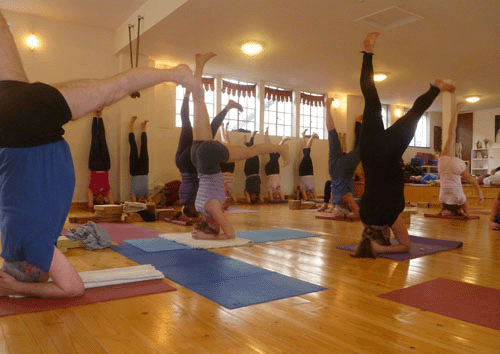
You will be introduced to the basic asanas (postures) which will include standing poses, sitting poses, inverted poses and recuperative poses. All the asanas have Sanskrit names, which the teacher will use – don’t worry, you are not expected to pick it all up straight away.
If you have difficulty with a pose the teacher will show you how to use yoga props, such as belts and blocks, to help you achieve the postures to the best of your ability.
As all the asanas have different effects on the body, beginners start by building up strength and stamina to improve muscular tone, flexibility and alignment. Practising the postures helps reduce tiredness and soothe the nerves. Yoga also trains and disciplines the mind which can help improve concentration. It can be a great help if you suffer from stress!
At the end of each class there is always a period of quiet rest and recuperation when some very basic pranayama (breath control) techniques may be taught. Observation and control of the breath improves vitality, quietens the bodily functions and calms the mind. The mind becomes concentrated and less liable to be distracted and agitated.
Yoga should always be practised on an empty stomach, so leave 3-4 hours after a main meal or 2 hours after a light snack. Do not bring a water bottle into the class but drink before and after.
Wear clothes that do not restrict your movement in any way. Most people wear shorts or footless leggings and a T-shirt. Yoga is always practised in bare feet.
Generally yoga will give you more energy day to day, plus the best night’s sleep you have had for ages! Yoga stretches your muscles, helps to mobilise joints, cure or alleviate aches and pains and make you feel more comfortable in your body. Students report improved concentration and a feeling of calmness.
Some of the benefits of yoga practice:
- increased vitality
- a sense of well-being
- more flexibility
- improved concentration
- better postural awareness
- improved strength & stamina
- more self-confidence
- mental & spiritual calm
No, but it is a spiritual science of self-realisation.
Classical yoga as defined by Patanjali is an eight stage process of spiritual development – the Eight Limbs of Yoga.
The first 2 stages are ethical disciplines (yama and niyama). Then come the postures (asanas) and breathing practices (pranayama). The last 4 are meditative stages: control of the senses (pratyahara), concentration (dharana), and meditation (dhyana), which can culminate in the transcended state of enlightenment (samadhi).
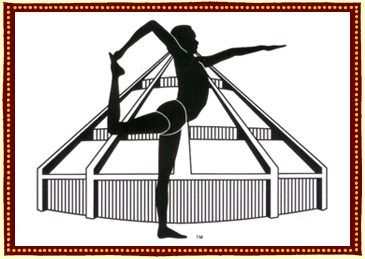
The Certification Mark is a registered worldwide trade mark and in this country is awarded to approved teacher members of the Iyengar Yoga Association (UK). Only properly trained and certified teachers who have maintained their professional development are legally permitted to use this logo.
The logo shows a silhouette of BKS Iyengar in the pose called Natarajasana against the triangular image of BKS Iyengar’s institute building in Pune, India. Also the name IYENGAR® is trademarked in the UK and the rest of Europe
The Iyengar Yoga (UK) is the national association for all practitioners of Iyengar yoga in the UK and provides a network of information about Iyengar yoga and yoga events in the United Kingdom.
IY(UK) is responsible for teacher training in the Iyengar method and the maintenance of standards. It also encourages the spread of BKS Iyengar’s method of teaching, especially through its network of teachers, providing an institute structure and support for local groups, publishing a twice yearly magazine and organising an annual national convention.
More information is available at www.iyengaryoga.org.uk.